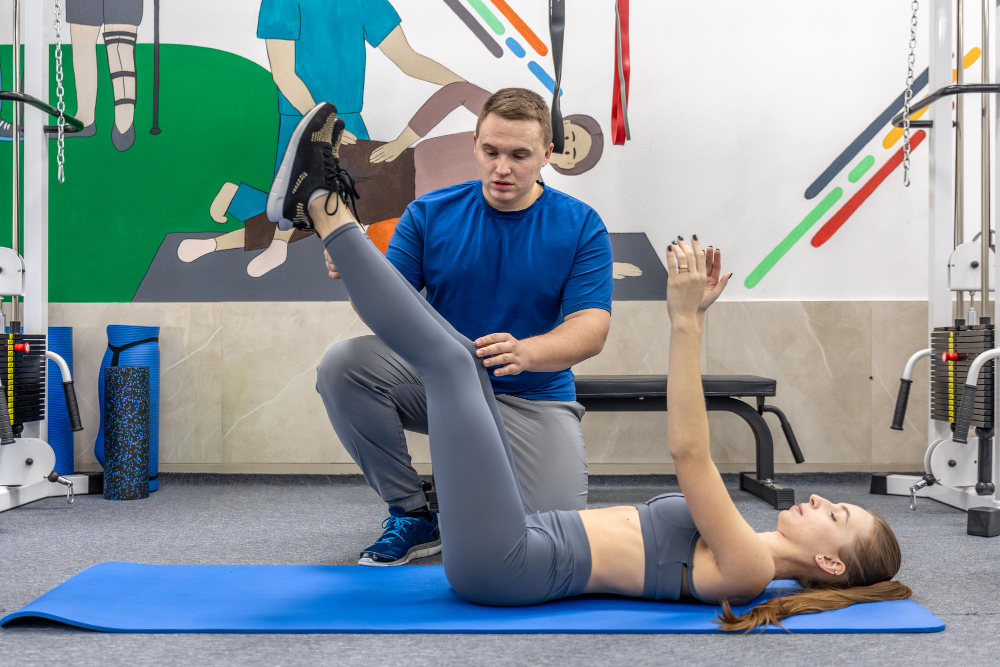
Have you ever watched someone do a squat and noticed their knees moving in a strange way? Or had a client say, “I feel this in my back, not my legs”?
These are the kinds of things personal trainers need to notice.
A Personal Training course Darwin can teach us plenty about workouts and working with clients, but anatomy and physiology are just as useful once we start coaching real people. The names might sound a bit scary at first, but the basic idea is pretty simple. Anatomy looks at how the body is put together, while physiology helps us understand how it works.
And once we connect that knowledge to actual exercises, it starts to make a lot more sense.
What Is Really Happening During a Squat?
Take a squat. We all know what one looks like.
But while someone is lowering down and standing back up, their hips, knees, ankles, muscles and joints are all working together. If something looks off, a trainer needs to have some idea of what might be happening.
Maybe the knees are moving too far inward. Maybe the person is putting more weight on one leg. Or perhaps they are struggling to stay balanced.
We do not need to stare at every tiny movement like a detective. But understanding the body gives us a better pair of eyes when we are coaching.
Not Every Exercise Works for Everyone
This is something new trainers learn pretty quickly… one workout does not suit every client.
One person might enjoy squats and feel completely comfortable doing them. Another may struggle with the same movement. That does not mean we simply tell them to keep trying until they get it.
We can change the exercise.
Maybe we reduce the range of movement. Maybe we use a different variation. Maybe we work on another movement first.
Knowing how muscles and joints work helps us make those choices with a bit more confidence.
Anatomy Can Make Coaching Easier
Clients usually do not want a ten-minute lesson on muscles during a workout.
They want to know what they should actually do.
Instead of throwing complicated terms at someone, we can keep things simple. “Keep your chest up.” “Slow it down.” “Push through your feet.” “Try not to let your knees collapse inward.”
Simple instructions often work better.
When we understand what the body is doing, it becomes easier to explain an exercise without making it sound like a textbook.
What If a Client Feels Pain?
This is where having a good understanding of the body becomes especially useful.
A client might say, “My legs are burning.” That is one thing.
If they say, “I have a sharp pain in my knee,” we need to pay attention.
A trainer should never try to diagnose an injury just because they have studied anatomy. That is not our job. What we can do is listen, stop or change an exercise when needed, and know when a client should speak with a doctor, physiotherapist, or another suitable professional.
Knowing our limits is part of being a responsible trainer too.
It Helps When We Build Workouts
Writing a workout should not be a case of picking six exercises because they look good together.
We need to think about who is standing in front of us.
What are their goals? What can they comfortably do? What movements are they familiar with? Are there exercises that need to be changed?
Anatomy and physiology give us some useful background for making those decisions. We can start looking at the person rather than simply looking at the exercise list.
That is a much better way to coach.
Clients Notice When We Know Our Stuff
Imagine asking your trainer, “Why are we doing this exercise?”
If the answer is just, “Because it is good for you,” that is not exactly helpful.
Being able to explain the reason in normal, everyday language can make a client feel more comfortable. We do not need to sound like a professor. In fact, please do not.
A simple explanation is usually enough.
When clients understand what they are doing and why they are doing it, they can feel more involved in their own training.
It Becomes More Useful Once We Start Training People
Anatomy and physiology can feel like a lot when we first learn them. There are muscles to remember, body parts to understand, and plenty of new words that seem to blur together.
Then we start working with clients and things click.
That muscle we learned about? We see it working during an exercise. That movement pattern we studied? Now we are actually coaching it.
For anyone looking at a career in fitness, learning these basics through a Certificate IV in Fitness Darwin can give you a useful foundation. The point is not to memorise a giant list of muscles just to pass an exam. It is to understand the body well enough to coach people thoughtfully, make sensible changes, and know when something is outside our role.
And that is the part that really matters.
FAQs
1. Why do personal trainers need to learn anatomy and physiology?
It helps trainers understand how the body moves and how muscles and joints work during exercise. This can make it easier to coach and adjust exercises.
2. Do personal trainers need to memorise every muscle?
No. A practical understanding of the main muscles, joints, movements, and body systems is more useful than trying to remember every single detail.
3. Can anatomy help trainers improve a client’s technique?
Yes. Understanding how the body moves can help trainers spot movements that may need adjusting and give clients clearer instructions.
4. Can a personal trainer diagnose an injury?
No. Personal trainers should not diagnose injuries or medical conditions. If something seems concerning, the client should be referred to an appropriate health professional.
5. Is anatomy and physiology hard to learn?
It can feel confusing at first. Once we connect the information to exercises and real people, though, it usually becomes much easier to understand.


Leave a comment